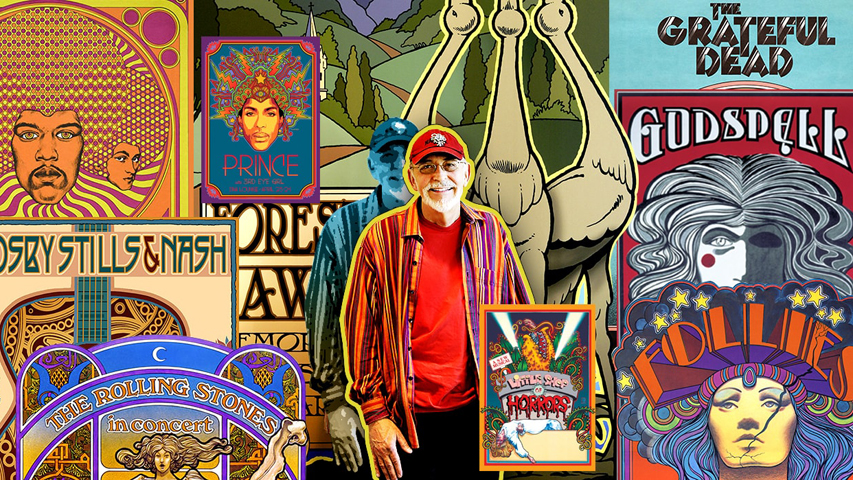
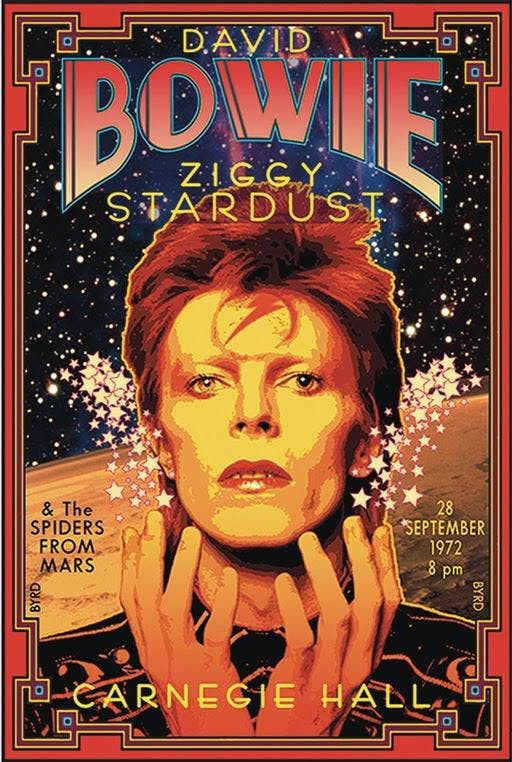
Painter. Designer. Illustrator. Showman of the printed image. Byrd did not simply advertise cultural moments; he gave them a face before the curtain rose.
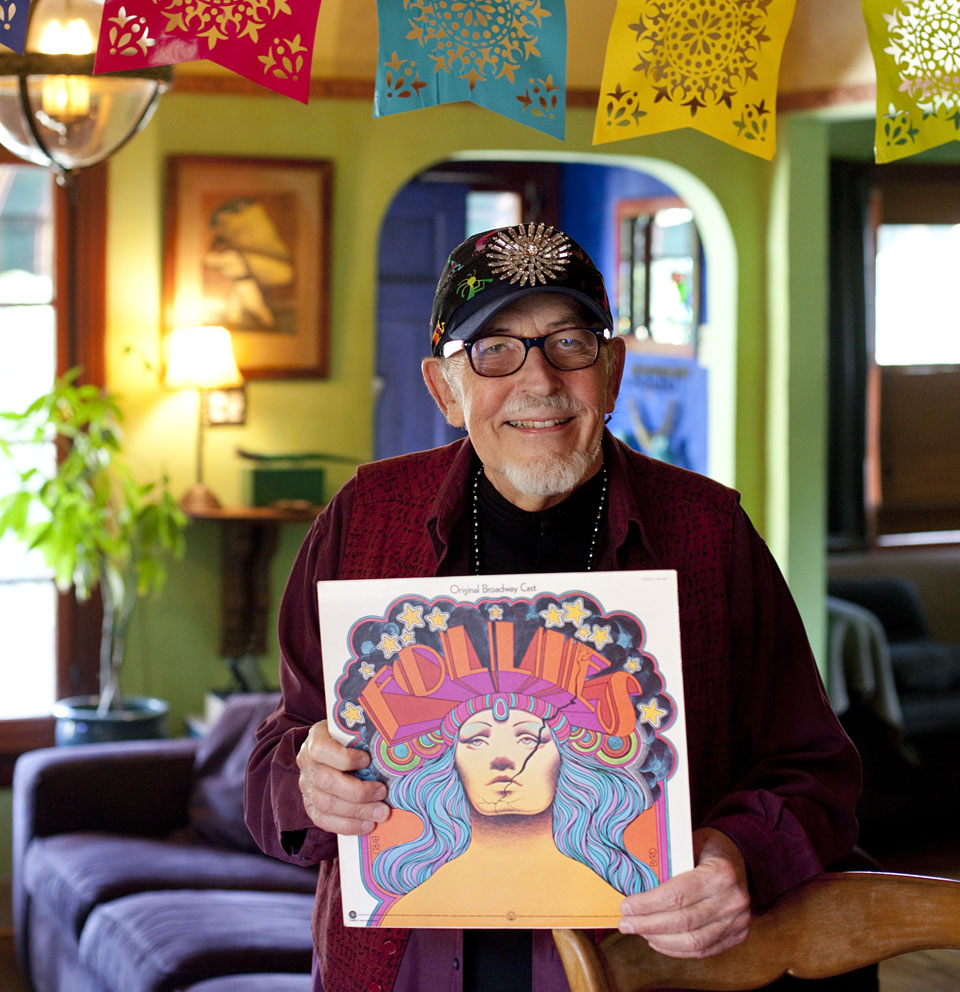
David Edward Byrd holding Follies artwork. Imported from the Desktop David Bryd folder.
Not just famous names
The temperament of a visual original.
David Edward Byrd worked with a painter's seriousness and a theatre person's appetite for presence. His posters are exact, witty, saturated, and alive with performance. He could make a concert commission feel operatic, a Broadway poster feel electric, and a character illustration feel hand-built rather than manufactured.
Born near Cleveland, Tennessee, raised in Miami Beach, and trained at Carnegie Mellon, Byrd carried fine-art discipline into commercial work without apologizing for either side. His career moved through television design, Fillmore East, Broadway and Off-Broadway, album packaging, magazine art direction, Warner Bros. illustration, retrospectives, and estate editions.
He was sharp, theatrical, exacting, generous to spectacle, and impossible to confuse with anyone else.
Byrd refused the dull separation between art and assignment. A poster was not filler around the event. It was the first performance, the first invitation, and sometimes the image people remembered decades later.
His best work carries glamour and bite at the same time: decorative but never lazy, psychedelic but disciplined, theatrical but precise. The design language here follows that spirit with bold color, ornate restraint, and poster-first storytelling.
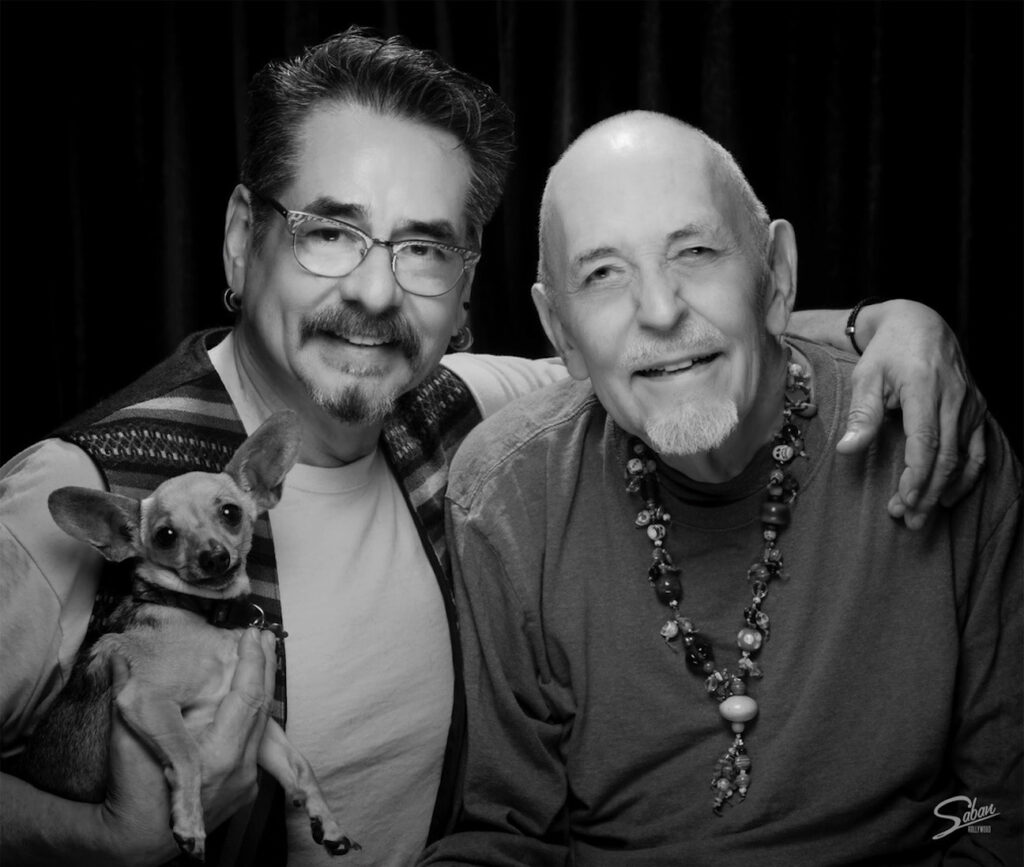
David's longtime partner and husband, Jolino Beserra, was part of Byrd/Beserra Studios and remains central to the human story around the estate. The legacy is not just inventory; it is stewardship of a shared creative life. Read Jolino’s afterword and 2026 addendum.
Byrd’s “Acid Queen” illustration — a portrait of Merry Clayton — was part of the London Symphony Orchestra Tommy package that won the 1973 Grammy for Best Album Package. The award went to the package’s designers, Wilkes & Braun; Byrd received a Grammy certificate for his participation, which he kept and cherished. He was careful, in Poster Child, to say so himself.
1973 · GrammyGrammy certificate — Tommy (LSO) Best Album Package, 1973BillboardHendrix Fillmore East poster — #8 Top 25 rock posters1976 · SmithsonianBicentennial poster show — Follies, Superstar, ElvisPratt125th anniversary Graphic Icons — Hendrix for the 1960sRetrospectivesRingling 2007 · Set the Walls on Fire 2010 · Brand Library 2011 · Bethel Woods 2012Carnegie MellonFounders Scholar · Boston Museum School freshman award
Byrd's life touches rock venues, Broadway houses, album packaging, gay publishing, Warner Bros. character systems, museum collections, retrospective exhibitions, and a major illustrated autobiography.
Design PressPRINT: East Coast psychedelic poster leaderEducationCarnegie Mellon: rock art starFillmore EastWolfgang's: exclusive designer contextTheatre PressTheaterMania: rock, Broadway, Warner Bros.MuseumPhiladelphia Museum of Art: Hendrix poster recordBookLit Hub: Poster Child excerpt